
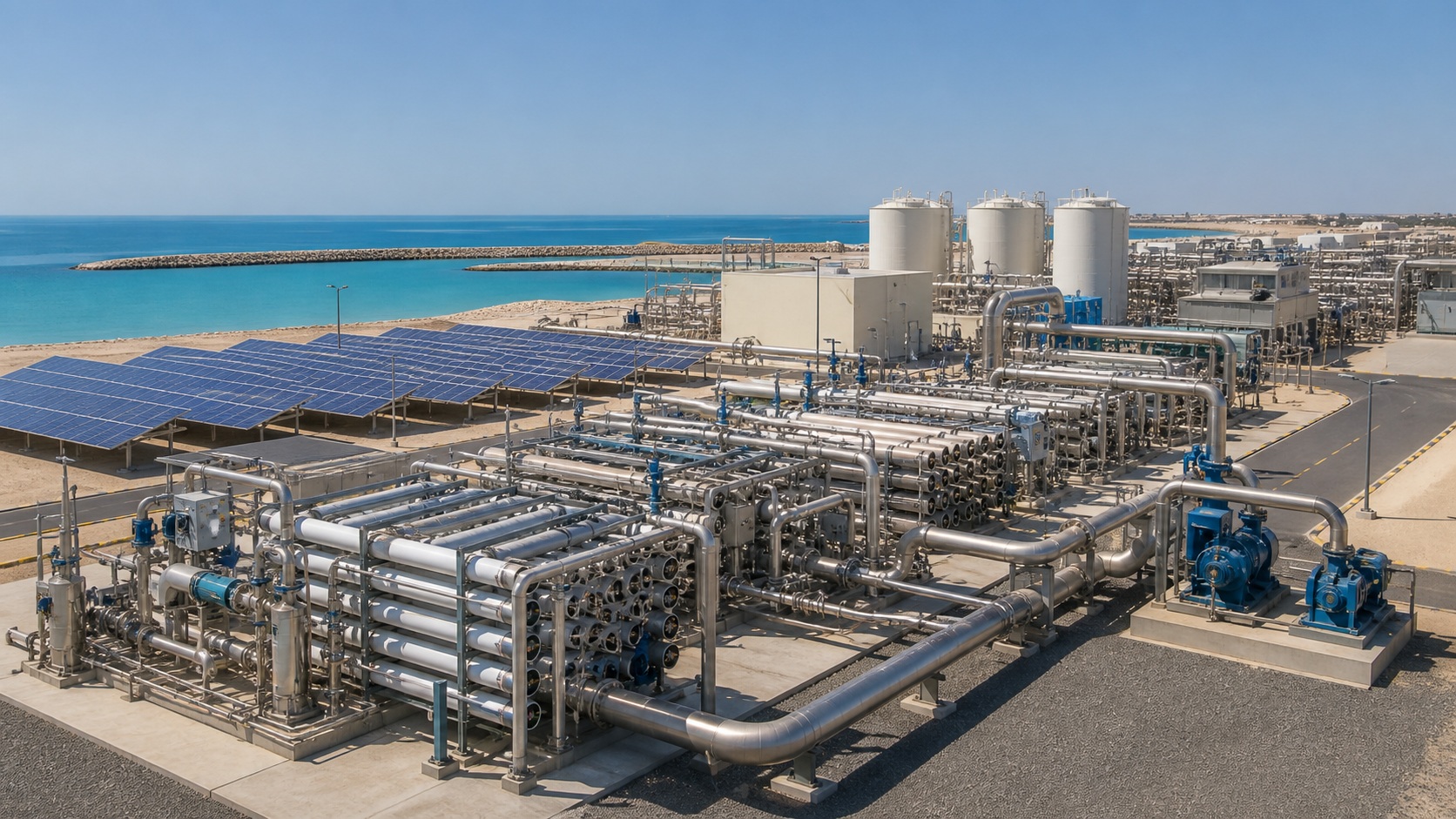
Kuwait Advances Water Security with New 272 MLD Seawater Reverse Osmosis Project
Kuwait is moving forward with a major seawater reverse osmosis project designed to expand drinking water production and strengthen long-term water security. The development also reflects the continuing growth of large-scale membrane desalination across the Middle East.
A 272 MLD Seawater Reverse Osmosis Plant
According to an announcement published by VA TECH WABAG on June 19, 2026, the company has secured the design, build and operate contract for the Doha Seawater Reverse Osmosis Desalination Plant with Recarbonation System – Stage II in Kuwait.
The planned facility will have a production capacity of 60 million imperial gallons per day, equivalent to approximately 272,000 cubic metres of potable water per day. Engineering, procurement, construction and commissioning are scheduled to be completed within 36 months.
The contract also includes five years of operation and maintenance. This long-term operational arrangement places additional emphasis on stable membrane performance, energy efficiency, effective pretreatment and predictable maintenance costs.
Solar Energy Will Support Plant Operation
The project will incorporate solar photovoltaic systems to provide part of the energy required by the desalination facility. Although high-pressure pumping remains one of the main energy demands in seawater reverse osmosis, combining desalination with renewable electricity can help reduce the carbon intensity of water production.
This approach is becoming increasingly important in regions where water demand is growing while governments and plant operators are also working to improve energy efficiency and environmental performance.
What the Project Means for the RO Membrane Industry
Large SWRO projects require more than high salt rejection alone. Membrane selection and system design must consider feedwater temperature, salinity, pretreatment quality, operating pressure, permeate requirements and the risk of biological or colloidal fouling.
For membrane suppliers, system builders and plant operators, several performance factors are especially important:
- Stable salt rejection under changing seawater conditions
- Reliable permeate flow at the selected operating pressure
- Resistance to fouling and repeated chemical cleaning
- Compatibility with the plant’s pretreatment process
- Predictable membrane life and replacement planning
- Lower lifecycle energy and maintenance costs
The inclusion of a five-year operation and maintenance period also shows why membrane decisions should be based on total operating performance rather than initial purchase price alone.
Demand for Efficient Desalination Continues
Water scarcity, population growth and industrial development continue to support investment in seawater desalination throughout the Gulf region. Reverse osmosis has become a central technology because it can deliver high-quality potable water while allowing operators to improve efficiency through better membranes, energy-recovery devices, digital monitoring and optimized cleaning strategies.
The Kuwait project provides another clear signal that demand for dependable, energy-efficient RO membrane systems remains strong. Future projects are likely to place even greater attention on membrane durability, renewable energy integration and the reduction of overall water production costs.
Yuhydro’s Perspective
Yuhydro continues to follow developments in seawater desalination and industrial water treatment. Selecting the appropriate RO membrane element should begin with a careful review of feedwater analysis, target recovery, required permeate quality and operating conditions.
For project-specific membrane selection or technical information, water treatment professionals can contact Yuhydro to discuss their application requirements.
Source: WABAG announcement on the Kuwait Doha SWRO Stage II project.